• Tech Book of the Month
  • Archive
  • Recommend a Book
  • Choose The Next Book
  • Sign Up
  • About
  • Search
Tech Book of the Month
  • Tech Book of the Month
  • Archive
  • Recommend a Book
  • Choose The Next Book
  • Sign Up
  • About
  • Search

November 2023 - Co-Opetition by Adam Brandenburger and Barry J. Nalebuff

This month we jump back to an older strategy book to think about pricing, partnerships, and negotiations.

Tech Themes

  1. Pricing Printers Poorly. The late-80’s printer aisle looked like trench warfare. There were three types of desktop printers: Dot-matrix (low-end), ink-jets (mid-tier), and laser printers (high-end). The laser segment had the highest prices, best margins, and was growing the fastest. Epson, normally a dot-matrix manufacturer, decided it should enter the laser segment with a competitively priced product, the EPL-6000. One week later, Hewlett‑Packard came out with a printer priced signficantly below Epson’s EPL-6000. Epson further cut price in response. Although Epson gained market share, the damage was done: hardware profits collapsed, and suppliers shifted to a razor-and-blades model, where ink or toner carried gross margins of 60 % or more. But because pricing had come down across the low-end, mid-tier, and high-end, ink-jets started to overtake dot-matrix sales - a better printer for a similar price to a dot-matrix a few months ago. Epson had completely screwed over the segment it was most dominant in by introducing a new, effective competitor. “What was Epson’s mistake? It misunderstood the Scope of the printer game. By treating the laser printer game as separate from the dot-matrix printer game, Epson failed to see that low-price entry into the laser segment could jeopardize its core business.” Epson eventually discovered the peril of winning the wrong battle.

  2. Bidding. In 1984, the FCC divided the country up into 306 separate markets and gave two cellular licenses to each market. Craig McCaw wanted a national cellular footprint before anyone else and went around buying up as many licenses as he could. Lin Broadcasting owned plum metro licenses—Los Angeles, Dallas, New York—that would knit perfectly into McCaw’s West‑Coast empire. In 1989, he made a hostile bid for LIN, conditional on LIN removing the poison pill anti-takeover clause in its shareholder rights plan. Poison Pill’s generally allow companies to issue extreme amounts of shares to dilute a potential acquirer’s interest, thereby making it uneconomic to buy shares in the company. BellSouth, already Lin’s roaming partner, had already crashed the party with a “white‑knight” merger plan and a special $40 dividend, arguing that its investment‑grade balance sheet trumped McCaw’s bidding frenzy. The challenge for BellSouth, was that McCaw had more aggresssive future assumptions for the value of Points of Presence (POPs, or consumers), and thus could justify a much higher bid than BellSouth. BellSouth saw an opportunity to “engage” in the bidding process, but only if LIN agreed to give it a $54m fee and cover $15m of BellSouth’s expenses. When McCaw raised his bid, LIN increased BellSouth’s expense cap to $25m. McCaw, wanting to move quickly to get LIN’s assets and aware of BellSouth’s lack of real interest in acquiring the company, quietly paid BellSouth $26m to stop bidding. McCaw then increased his bid to $6.3B (up from $5.85B) and won the deal. The takeaway here is that BellSouth understood there was some easy money to be gained by entering the bidding process. If it won at a fair price, it would be happy, if not, it would get $75m cash for doing a small amount of work. McCaw also understood that there weren’t any real rules governing BellSouth’s bid and that any payment between parties would be governed by contract law, avoiding any potential antitrust issues. A similar dance played out on Texas’ coast. Corpus Christi’s ABC, NBC, and CBS affiliates—founded decades earlier by local entrepreneurs who treated broadcasting like a civic duty—banded together in 1993 to demand per‑subscriber fees from cable giant TCI. John Malone, ever the game theorist, yanked their signals, flooded the market with distant‑signal substitutes, and quietly negotiated bundled carriage rights in nearby Beaumont before the stations blinked. When one of the entrepreneurs who owned a Beaumont station offered its signal for free, TCI refused. Here, TCI was linking the Beaumont decision to the Corpus Christi decision. By not carrying Beaumont, he was signaling that “how you play me in one city will impact how I do business with you in another.” The DOJ later sued the three broadcasters for collusion, but Malone still walked away having proven that controlling the pipe gives you leverage even when you’re shut out of content. In 2023, when carriage talks collapsed, Charter yanked ESPN and 17 other Disney channels from 14 million Spectrum homes, betting that broadband stickiness outweighed sports FOMO. Disney finally folded, granting free ad‑tier Disney+ access to Spectrum subs—a Malone‑esque outcome.

  3. Cheap Complements and Cheap Competition. When Electronic Arts founder Trip Hawkins launched the 3DO Interactive Multiplayer in 1993, he flipped the console model on its head: keep license fees tiny so developers flood the platform, outsource hardware to Panasonic and GoldStar, and collect a royalty on every game sold. Developers indeed piled in—over 300 titles were announced within 18 months—but the box debuted at a prohibitive $699, three times a Super NES. Consumers passed, inventories ballooned, and retailers slashed shelf space, proving that abundant complements can’t rescue a core product priced for plutocrats. Worse, the royalty stream never matured: with a sub‑million installed base, even best‑selling games shipped under 50k units. By 1996, Hawkins shuttered 3DO hardware, pivoted to software, and lost the ecosystem he had courted. Co‑opetition’s moral: complements add value only when they multiply an affordable core, not when they subsidize an unaffordable one. Apple’s $3,499 Vision Pro dazzles developers yet risks 3DO déjà vu: a high‑end box in search of an installed base big enough to justify killer apps. It seems like there isn’t actually a market there after all. Big Tech’s co‑opetition looks like a rotating tag‑team match: Apple and Google split roughly $20 billion a year in Safari search‑rent—cash Apple pockets while Google keeps iPhone eyeballs—yet the same pact boxes Microsoft’s Bing out of mobile search entirely. Microsoft struck back in 2023 by wiring OpenAI’s GPT‑4 into Bing Chat, forcing Google to scramble with Bard (now Gemini); each new model is less about revenue today than denying the other a toehold in AI mindshare. And sometimes a “friendly” move for one is a gut punch for another: Apple’s App‑Tracking‑Transparency switch won plaudits for privacy but wiped an estimated $12 billion off Meta’s 2022 ad revenue, reminding every platform that a partner today can set the rules tomorrow.

Business Themes

The-Capital-Cycle.jpg
  1. PARTS. Players, Added Value, Rules, Tactics, Scope. Players - List every party that can affect the game—not just obvious competitors but suppliers, complementors, customers, regulators, and would‑be entrants. Brandenburger and Nalebuff call this the “value net.” Miss a player and you misprice your leverage: Epson forgot ink suppliers; Trip Hawkins forgot retailers. Added  Value - Quantify how much value the game loses if you step out. Holland Sweetener added so little that NutraSweet could cut price to drive it out. Your bargaining power equals your added value, nothing more. Rules - These are the formal and informal contracts that shape payoffs—patents, standards, MFN clauses, or even industry norms. Changing a single rule (e.g., allowing distant‑signal import in Corpus Christi) can flip winners and losers overnight. Tactics - Moves and countermoves that alter perceptions or hide true intentions: McCaw’s escalating bids signaled resolve; BellSouth’s dividend sweetener signaled financial strength. In judo strategy, feints and timing matter as much as raw force. Scope - Decide which arenas the game covers—geography, product lines, time horizon. Sega narrowed scope to teens; Ryanair to short‑haul cheap UK-Ireland flights. Expanding or shrinking scope can turn a losing game into a winning one.

  2. Added Value Reduction. Added value equals “pie with you” minus “pie without you.” Holland Sweetener stormed NutraSweet’s European aspartame stronghold in 1987, hoping to undercut Monsanto’s $70‑per‑pound monopoly. NutraSweet responded by chopping price to $22 and locking Coke and Pepsi into long‑term supply deals. Consumers enjoyed lower prices, but Holland’s new plant hemorrhaged cash and eventually shut down. The pie grew, yet Holland’s slice was negative—a textbook case of creating consumer surplus you can’t capture. IBM managed the opposite trick. Its open‑architecture PC spawned an army of Compaq‑ and Dell‑clones that used reverse‑engineered BIOS chips to deliver 95 % of the function at 60 % of the price. IBM had given up its added value by going both open and outsourcing the manufacturing of the computers, leaving very little IP or value add (outside of brand) to be monetized. By 1990 IBM’s own share of the “IBM‑compatible” market had cratered, and the company ultimately exited retail PCs, conceding de facto standards to the very cloners it had empowered. When your absence barely dents the ecosystem, your added value rounds to zero. OpenAI’s proprietary GPT models generate a lot of value, but Meta’s open-source Llama models enable startups to create custom copilots at near-zero licensing costs, potentially eroding GPT’s pricing umbrella much as Holland Sweetener eroded NutraSweet. Right now, Llama models are just not even close to as good as OpenAI’s models, so up to this point there has been no price erosion. However, price erosion may be the ultimate goal of Mark Zuckerberg, create an open, cheap, cost-competitive model that becomes a no brainer standard and hurts OpenAI’s position with proprietary models. Zuck knows that chatGPT is taking away device time from Instagram and see it as a long-term threat. The pie grows; who keeps the surplus is still up for grabs.

  3. Playing Judo. Sega entered 1990 with 6 % U.S. console share; Nintendo held 94 %. Instead of matching Nintendo’s kids‑friendly catalog, Sega leaned into a teen demographic with Sonic the Hedgehog, faster 16‑bit hardware, and cheeky ads (“Genesis does what Nintendon’t”). Nintendo rushed the Super NES and loosened violence taboos, but by 1994 share was near‑parity. Eventually Nintendo’s stronger software pipeline reclaimed leadership, Sega exited hardware in 2001, and the market stabilized with clearly segmented audiences—a judo bout where the lighter fighter scored enough points before the heavyweight regained footing. Europe’s skies offer another judo masterclass. Ryanair slashed Dublin‑London fares from $150 to under $100 in 1991, betting that a no‑frills model, 30‑minute turnarounds, and a single 737 fleet would lure new flyers instead of stealing British Airways’ elite road‑warriors. BA could have matched fares system‑wide and bled billions; instead, it ceded price‑sensitive segments while defending long‑haul premium cabins. Today, Ryanair ferries more passengers than any other European airline, yet BA still dominates trans‑Atlantic business class. Sometimes, yielding the mat where you’re weakest is how you keep the championship belt.

    Dig Deeper
  • The Making of Electronic Arts & 3DO - Trip Hawkins Interview

  • Computer History - The History of IBM and the Clone Wars

  • Michael O'Leary: Ryanair's Maverick CEO

  • The Billion-Dollar Battle Between Red Bull and Monster

  • What is a Most Favored Nation Clause? | Contract Central

tags: Adam Brandenburger, Barry Nalebuff, Epson, HP, Hewlett-Packard, Craig McCaw, LIN, BellSouth, TCI, John Malone, Charter, Trip Hawkins, 3DO Interactive, EA, Apple, Google, OpenAI, Microsoft, Meta, NutraSweet, Monsanto, IBM, Compaq, SEGA, Nintendo, Ryanair, Mark Zuckerberg, British Airways
categories: Non-Fiction
 

September 2021 - Super Mario: How Nintendo Conquered America by Jeff Ryan

This month we dive into the history of Nintendo and Super Mario, the loveable, super-smashing, tennis-playing, go-karting, partier. Jeff Ryan’s book explores the history of Nintendo and the evolution of the Video Game industry to the console competition we have today.

Tech Themes

  1. Constraint Breeds Creativity. Sometimes, challenges drum up creativity like nothing other than having your back against the wall can. This was the case with Nintendo. In 1980, Nintendo’s CEO Hiroshi Yamauchi sent his son-in-law, Minoru Arakawa to Manhattan to launch Nintendo of America. The idea was to launch Nintendo into the large and growing market for arcade cabinet games in the US. Nintendo had developed a Space Invaders knock-off called Radar Scope to take the market by storm. However, it sold incredibly poorly and months after moving to the US, Arakawa found himself with 2,000 large, unsold arcade cabinet games and a disappointed father-in-law. Yamauchi scoured the company for interesting game ideas, not wanting the pre-made cabinets to go to waste, and found one from a young designer named Shigeru Miyamoto. Miyamoto drew inspiration from Popeye and King Kong to come up with Donkey Kong, a revolutionary “platform” style game that involved a character named Jumpman trying to save a damsel in distress Pauline from a giant evil gorilla. After coming up with this crazy concept game, Nintendo still had to re-work the original Radar Scope circuit boards. The boards were shipped from Nintendo’s Japanese headquarters to Manhattan, where Arakawa and his wife carefully removed the Radar Scope game and installed the new Donkey Kong game. Nintendo’s sales network convinced two bars in Seattle to pilot the game and it took off like crazy; people played 120 times per day, yielding $30 of profit to Nintendo every day. Jumpman would later become Mario, Donkey Kong would go on to become a staple character in Nintendo’s video gaming world, and all because of an epic failure and a distressed company.

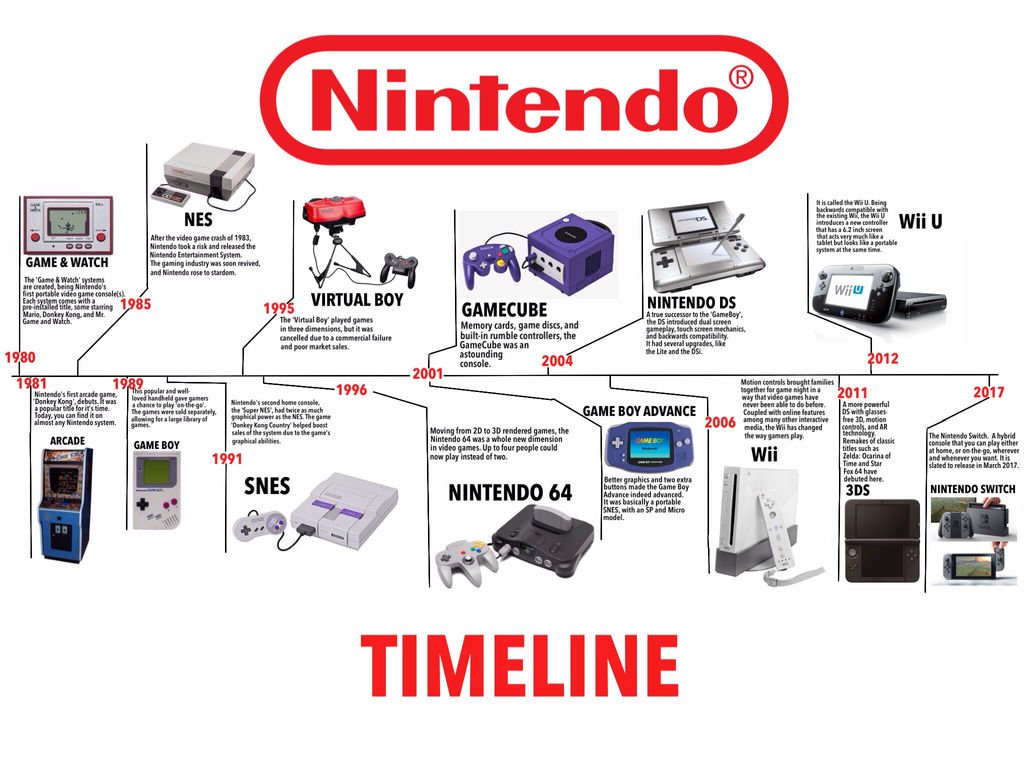
  2. Cabinet, Console, and Competition. Staying relevant in technology evolution. Nintendo successfully moved from a video game cabinet to the super Nintendo, the Gameboy, the N64, the GameCube, the wii, and now the Switch. At each stop, Nintendo tried hard to leverage all of the resources available in the hardware of the day. By purposefully maxing out its new hardware capabilities, Nintendo was able to build innovation into its games. As an example, Nintendo leveraged a special aspect of code in the NES to build Mario’s initial music theme. While Mario is a silent character, this created a new atmosphere for gamers. Later on, Nintendo would launch the N64 Rumble Pak, which provided haptic feedback through the controller based on gameplay. This became a staple concept for all consoles on the market. However, it wasn’t always fun and games. Nintendo missteps are single-handedly responsible for the creation of Sony’s Playstation. In 1988, a Sony Engineer began secretly developing a chip to help make CD-ROM games compatible with the Nintendo. Nintendo was interested in broadening its capabilities and signed a contract with Sony to produce an add-on device for the Super Nintendo Entertainment System (SNES). Although the two companies had signed a deal, it was clear that Nintendo would have to give up substantial control of the creative rights and hardware to Sony with the add-on. Yamauchi could not give Sony that much control, and in a historic change of direction at the 1991 CES, he went behind Sony’s back to partner with Sony’s biggest rival, Phillips. However, Phillips was not a super-strong development partner and the SNES CD-ROM add-on was plagued with delays. Sony continued the development of a gaming system on its own and Nintendo shifted priorities to its next console, the N64. Sony’s CD-ROM gaming system had a significant advantage over the N64 cartridge-based system in that it allowed much easier and consistent, open standards for developers. Sony went to Square, one of Nintendo’s top game makers, and lured them over to produce its famous Final Fantasy series for the upcoming launch of the PlayStation in 1994. The PlayStation seized significant market share from Nintendo and entered Sony into the gaming space. Nintendo’s decision to opt for control and proprietary formats in the N64 and GameCube helped avoid counterfeit games but left the market open to Sony’s Playstation and consumers that wanted an all-in-one device (games, CDs, DVDs).

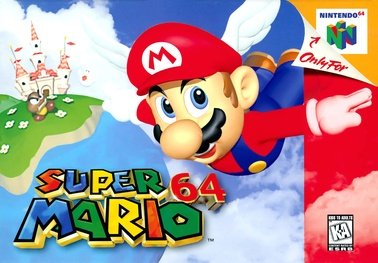
  3. Play the Long Game. Miyamoto had the idea for a three-dimensional Mario that would take advantage of all of the improvements in graphics rendering by the early 90s. While the idea gestated, Miyamoto tried to think of how game mechanics for 3D games could work. After serious thought and some development time spent in the early 1990s, Miyamoto shelved the idea because he felt they would need a bigger controller with more buttons to fully realize the vision of a 3D Super Mario. After Nintendo and Miyamoto began development on Super Mario 64 in September 1994, they ran into delays caused by contrasting opinions on camera views and game layout. On top of this, Miyamoto had grander designs than Nintendo had time for, and several courses had to be scrapped to get to a working version. The game shipped after the 1995 holiday season and delayed the launch of the Nintendo64 until April 1996. However, because Nintendo had created such strong, single-player, free-roaming game mechanics, this allowed some of the unused levels to be put into Legend of Zelda: Ocarina of Time, which debuted in 1998. Sometimes it takes time for the world and technology to catch up to your ambitions.

Business Themes

nintendo_timeline_by_vincentweir_darjnzt-fullview.jpg
Super_Mario_64_box_cover.jpg
  1. An Intense Family Business. Nintendo was started in 1889 by Fusajiro Yamauchi to produce flower cards, which are a type of Japanese playing card. Despite significant trouble during the Russo-Japanese War of 1907 and World War II, the company survived long enough for third-generation Hiroshi Yamauchi to take the reigns in 1950. Over the next 20 years, Nintendo would ride the wave of post-war popularity to a 1963 IPO on the Osaka and Kyoto stock exchanges. However, in the late 60’s, appetite for cards decreased and Yamauchi was looking for a new market to support the company’s growth. In 1969, Gunpei Yokoi joined the company and set it off on a new trajectory developing simple electric toys. In the 1970s and 80’s the company repositioned itself as a handheld, console, and cabinet video game producer. Since then, Nintendo has gone on to produce millions of games and systems. There is something amazing to be said about a business that finds its next wave of growth in its S-curve and somehow stays alive through multiple wars, products, and competitors.

  2. Counter-Positioning. Nintendo is famous for its numerous licensing deals to promote its characters on everything to build brand awareness and associations amongst consumers (Super Mario Mac & Cheese anyone?). Nintendo leveraged its history selling toys to children to create a strong brand of reputable characters only rivaled by the likes of Disney today. Because Nintendo focused on a family-friendly, younger customer base (no blood in games on the original Nintendo), it left some un-fulfilled customers in the market. Enter SEGA and Sonic the Hedgehog. SEGA was started as a simple amusement game provider for military bases in the 1940s. The company launched its first video game in 1973, its first console in 1982, and created Sonic in 1991. Sonic was everything Mario was not - he was purposely built to be a character built for teenagers. As School of Game Design points out: “Just as the 19th century expressionists use shape and line to evoke emotional responses, character designers today use the shape of a character’s body to communicate the personality of a character to us. Mario is circular, he has a button nose, a pot belly, and his hands, feet, and head, are all round. Sonic’s design on the other hand is all jaggy triangles, he has spiky hair, pointy cat ears, ski goggle eyes, and torpedo shoes…Right out of the gate the personalities clash. Sonic has the image of a mischievous bad boy, while Mario is playful, and aloof.” This is a classic example of counter-positioning - or directly occupying a competitive place in the industry that is the exact opposite of the incumbent firm. Sonic was the anti-Mario, and helped SEGA launch its Genesis platform.

  3. The Video Game Recession & Supply Chain Bullwhip. While Super Mario and Donkey Kong helped launch a massive interest in video and arcade games, there were some periods in the 1980s when people thought videogames were just a fad. In 1983, the arcade game industry experienced a massive recession driven by a common supply-chain issue called the bullwhip effect. As explained in this simple video, the bullwhip effect occurs when a change in demand has an amplified effect across a supply chain from customer to retailer to wholesale to distributor to manufacturer. The effect causes massive forecasting errors and inventory build up due to an over-extrapolation of demand. In the late 1970s and early 1980s, video games were all the rage driven by Atari’s Pong and Space Invaders games. This attracted a flood of competition from Coleco, Mattel, and Phillips. Everyone forecasted that market saturation was years away, and consumers would be itching for video game and cabinet game systems for the next few years. As a result, many video game companies over-ordered from their cartridge and console manufacturers. Once the video game companies had too much inventory on hand, they started discounting it to try to sell more, but it could only sell so much. After being unable to sell several systems, Atari famously buried some of its inventory at a landfill site in New Mexico. This effect can cause compounding losses for companies, because they buy inventory at full or sometimes above full price, sell games at cheaper prices due to market saturdation, and often have to pay to house or destroy extra inventory. The bullwhip effect is a crippling issue that companies like Peloton are facing today.

Dig Deeper

  • There will Never Ever be another Melee player like Hungrybox - Documentary exploring Professional Super Smash Brothers Athletes

  • Super Mario Bros 30th Anniversary Special Interview with Shigeru Miyamoto and Takashi Tezuka

  • CRASH: The Year Video Games Died

  • The History of the Gameboy

  • The 10 Biggest Mistakes in Nintendo History

tags: Nintendo, Super Mario, Mario, Luigi, Hiroshi Yamauchi, Shigeru Miyamoto, Donkey Kong, Video Games, Jumpman, Wii, Switch, Gamecube, N64, NES, SNES, Zelda, Playstation, Phillips, CDs, DVDs, Disney, SEGA, Sonic, Genesis, Bullwhip Effect, Mattel, Coleco, Pong, Space Invaders, Minoru Arakawa, Gameboy
categories: Non-Fiction
 

About Contact Us | Recommend a Book Disclaimer